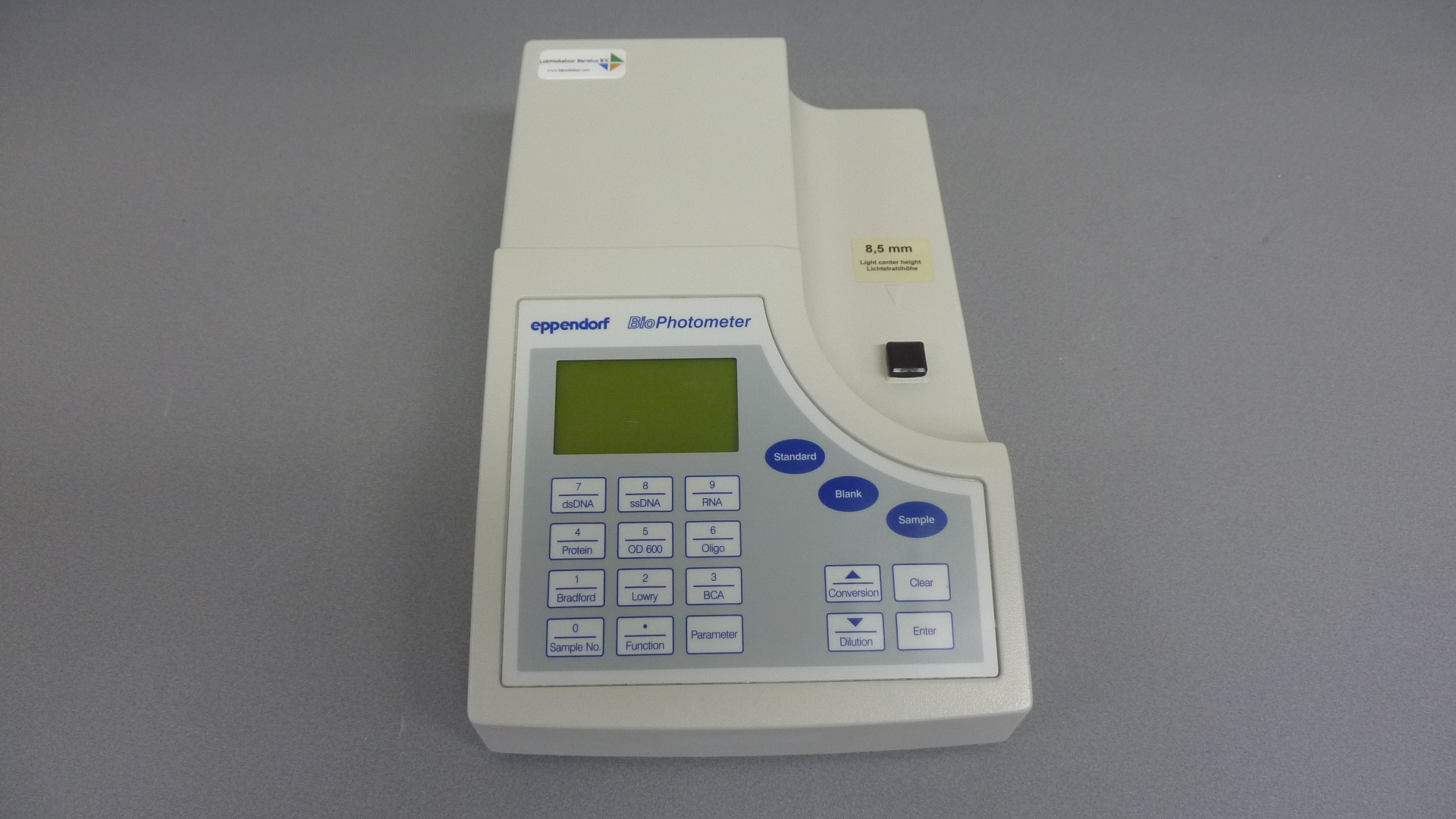
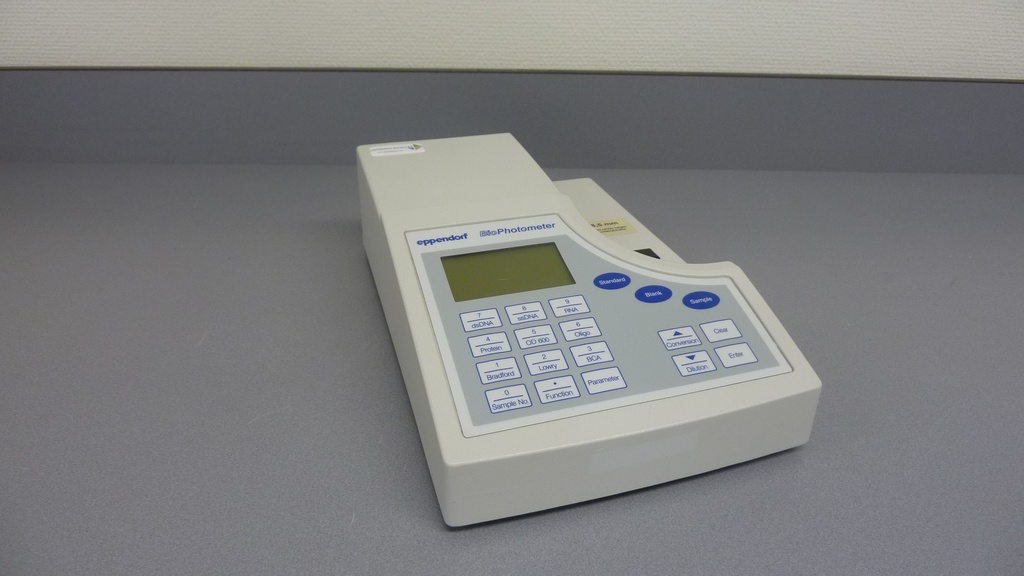
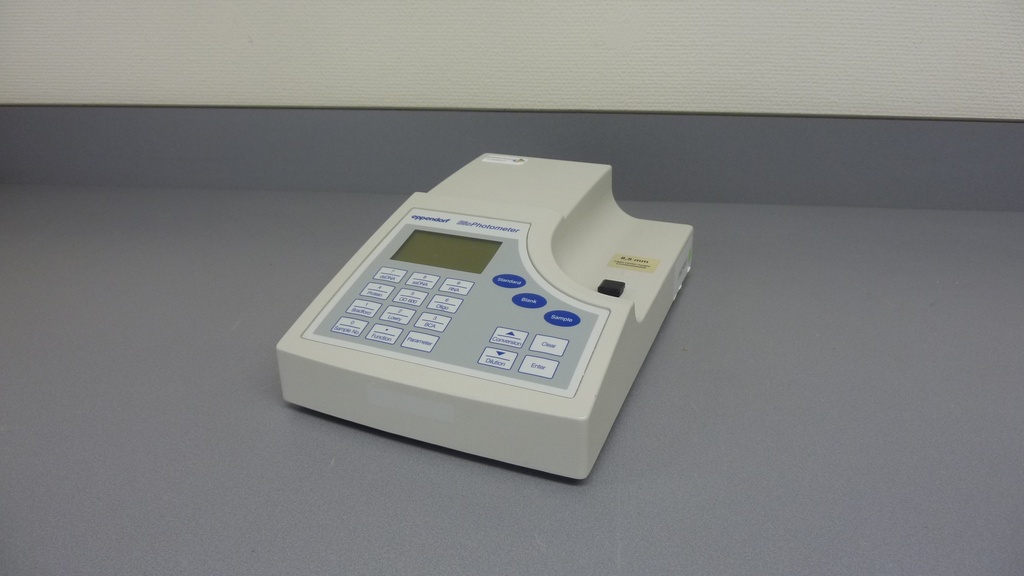
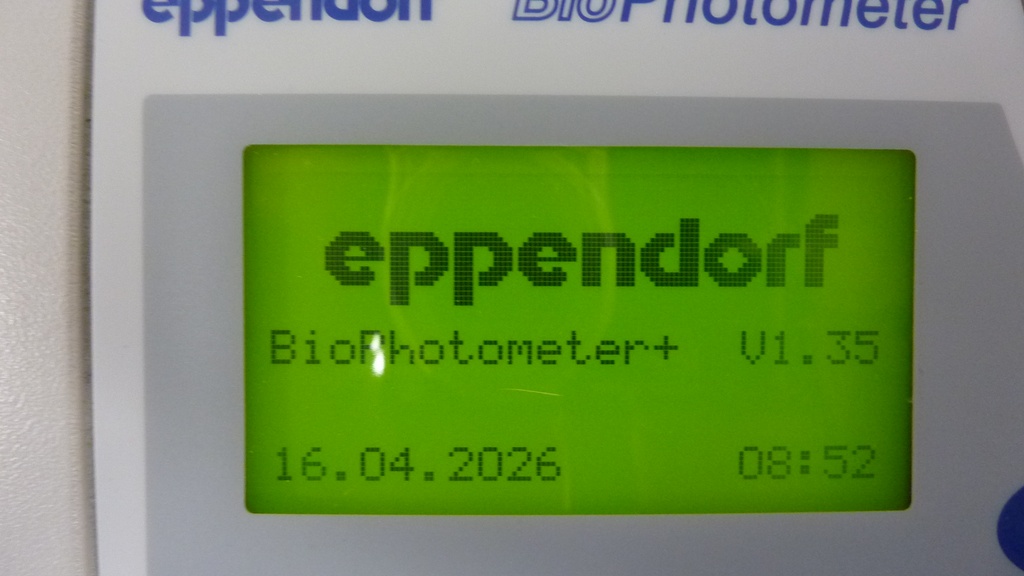
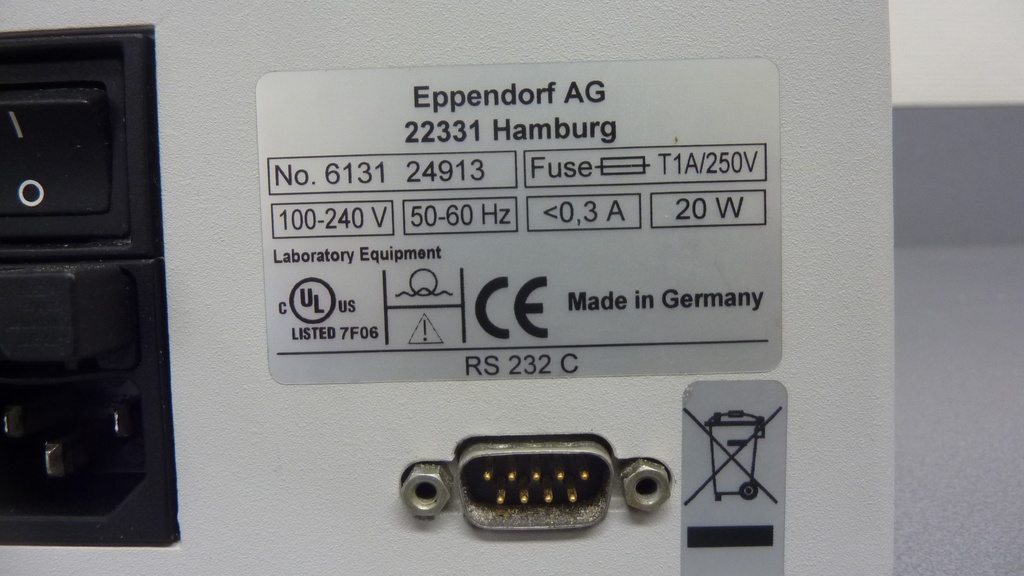
The BioPhotometer from Eppendorf is used for rapid, simple and convenient measurement of the most common methods in research labs in the fields of molecular biology and biochemistry.
There are twelve preprogrammed factory-set methods which can be called up at the push of a button.
Nucleic acids
dsDNA: Double-stranded DNA
ssDNA: Single-stranded DNA
RNA: RNA
Oligo: Oligonucleotides
Proteins
Protein: Direct photometric measurement
Bradford: Bradford method
Bradford micro: Bradford method, low concentration range
Lowry: Lowry method
Lowry micro: Lowry method, low concentration range
BCA: BCA method
BCA micro: BCA method, low concentration range
Bacteria density
OD 600: Turbidity measurement
Optical system: Absorption single-beam photometer with reference beam and several fixed wavelengths
Irradiation source: Xenon flash lamp
Spectral dispersion: Holographic concave grating
Measuring wavelengths: Xe 230, 260, 280, 320, 562, 595 nm
Wavelength selection: Method-dependent, program-controlled
Spectral bandwidth: 5 nm at 230 to 320 nm, 7 nm at 562 to 595 nm
Wavelength systematic error: ±1 nm at 230 to 280 nm, ±2 nm at 320 to 595 nm
Wavelength random error: ≤ 0.1 nm
Photometric measuring range: 0.000 to 3.000 A Photometric random error: ≤ 0.002 A at 0 A, ≤ 0.005 A at 1 A
Photometric systematic error: ± 1 % at 1 A
Accuracy of reading: 0.001 A
Stray-light proportion: < 0.05 %
Radiation detector: Silicium photo diodes
Measuring procedure: End-point against blank
Cuvette shaft: 12.5 x 12.5 mm, not temperature-controlled
Overall height of cuvettes: Min. 36 mm
Height of light beams in the cuvette: 8.5 mm
Light bundle in the cuvette: Width: 1 mm, Height: 1.5 mm
Dimensions (WxDxH): 200 x 320 x 100 mm
Weight: 3 kg
| Weight | 0,0 kg |
|---|